Every playground project we've ever scoped has hit the same wall at some point: "This is exactly what we want. Now how do we pay for it?"
The good news is that funding exists for almost every type of organization that wants to build one: state grants, county programs, corporate foundations, and community fundraising all touch playgrounds in Florida. The bad news is that it's scattered across a dozen websites, application portals, and eligibility rules that change by fiscal year. Nobody has time to research all of it while also running a school, an HOA board, a congregation, or a parks department.
So here's the 2026 version of the guide we wish existed when we started doing this, organized by who you are, since a school district, an HOA, and a church qualify for very different things.
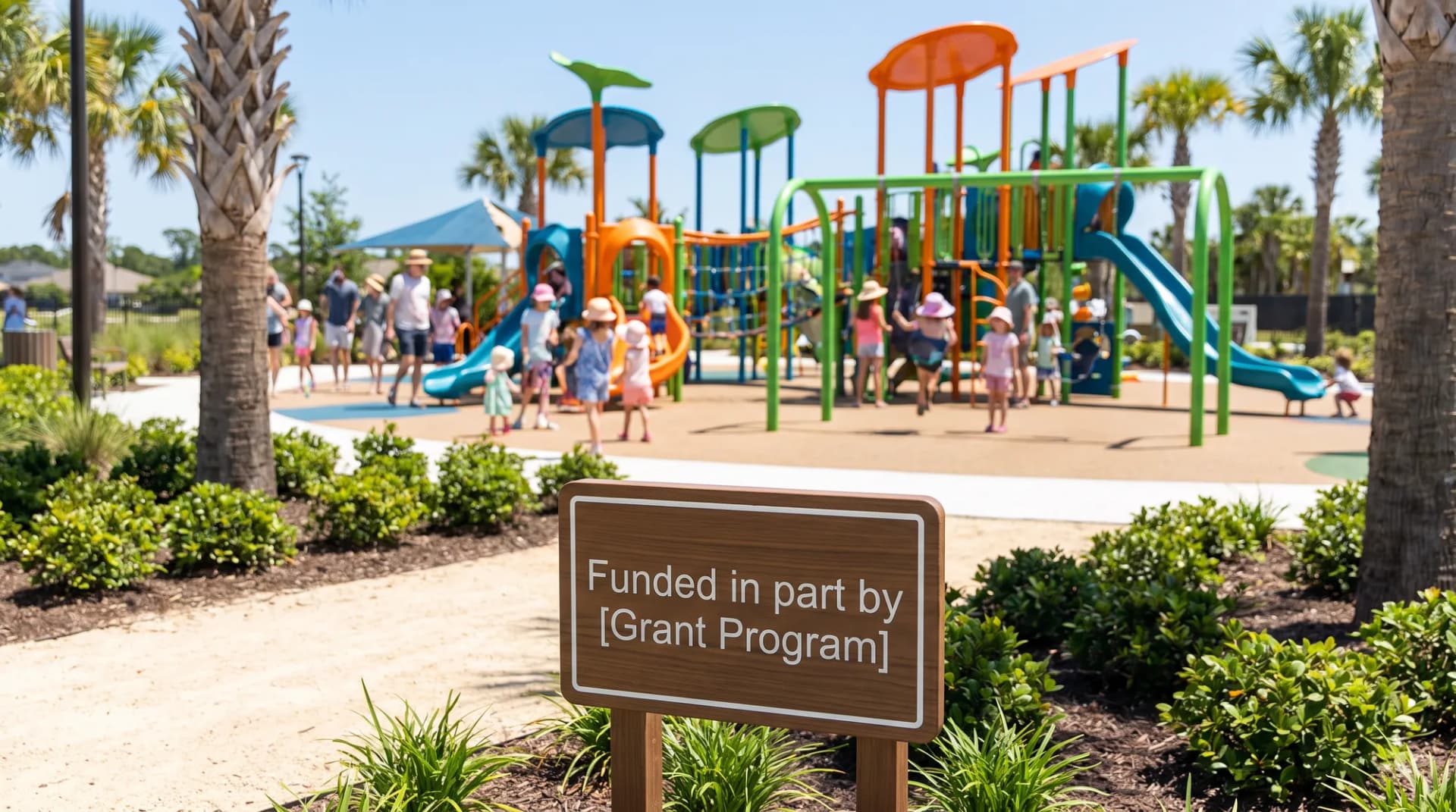
State & local government funding
The largest funding sources for public and public-facing playground projects in Florida, worth checking first regardless of who you are.
- Florida Recreation Development Assistance Program (FRAP). A competitive, reimbursement grant from the Florida Department of Environmental Protection, open to counties, municipalities, and other eligible local government entities, for developing or renovating public outdoor recreation facilities, including playgrounds. Grant requests currently max out around $200,000, and funded sites carry a long-term public-use covenant. Schools and nonprofits typically need a city or county government to sponsor or partner on the application.
- Community Development Block Grants (CDBG). Administered locally by counties and cities using federal HUD funding, CDBG dollars can fund public playground improvements in qualifying lower-income areas. Availability and priorities vary by county, so your local community development office is the place to start.
- USDA Rural Development, Community Facilities Program. Grants and low-interest loans for essential community facilities, including public playgrounds and childcare facilities, in eligible rural Florida communities.
- Land and Water Conservation Fund and Recreational Trails Program. Federal-to-state pass-through funding for outdoor recreation and trail-connected projects, administered through Florida DEP. Worth checking if your playground is part of a larger park or trail project.
- County park impact fees. Many Florida counties collect impact fees earmarked specifically for new park and recreation infrastructure in growing areas. Ask your county parks and recreation department directly.
Schools
- Partner with your city or county. Public school playgrounds usually can't apply for FRAP directly, but a partnership with your city or county often can.
- PTA/PTO and booster club fundraising. Still the fastest path for smaller projects and supplemental equipment.
- District capital improvement budgets. They sometimes have unspent facilities funds late in the fiscal year, so it's worth a direct ask.
- Corporate and foundation grants. Open to public and charter schools in most cases, especially where the project serves a high-need student population.
HOAs and communities
This is the hardest group to fund through government grants, because most public programs require the space to be open to the general public, not just residents. Still, there are real options.
- Reserve funds and special assessments. The most common path, and the one your board has the most control over.
- Developer amenity funds. Worth a look if the community is still under developer control or recently transitioned.
- Corporate community grant programs. Several major retailers and foundations run annual playground or community-space grant cycles open to HOAs and neighborhood associations.
- Matching or cost-share programs. Some counties offer partial matching funds if an HOA agrees to open part of the play space to the public.
Churches and faith-based organizations
Most government playground funding excludes religious organizations directly. That doesn't mean funding is off the table.
- 501(c)(3) nonprofit status. It opens the door to most corporate and foundation grants, especially where the playground serves a preschool, daycare, or community outreach program run by the church.
- Denominational and conference grants. Many denominations run their own capital or ministry grant programs for member congregations.
- Community and corporate foundation grants. Retailers, insurers, and local foundations frequently fund faith-based community spaces when the application is framed around community benefit rather than worship use.
- Capital campaigns. Still the most reliable funding source for congregation-led projects, and grants can meaningfully offset the total.
Cities and municipalities
Cities have the widest range of options, and usually the most experience navigating them: FRAP, CDBG, LWCF, general obligation bonds, park impact fees, and Florida Job Growth Fund dollars where a project ties to broader community or economic development goals. The challenge for most municipal parks departments isn't finding a program. It's the staff time to manage multiple applications at once.
Corporate & national grant programs worth knowing
These cut across every organization type above and are worth checking regardless of who you are.
- KABOOM! Community-built playground grants and planning support.
- Voice of Play. Playground and outdoor learning grants.
- Equipment manufacturer grant programs. Several major playground manufacturers run their own annual grant cycles.
- Retail and corporate foundation community grants. Home improvement retailers, grocery chains, and regional banks often fund community playgrounds through local giving programs.
How to actually win one
Grant reviewers see a lot of vague applications. A few things consistently separate the ones that get funded.
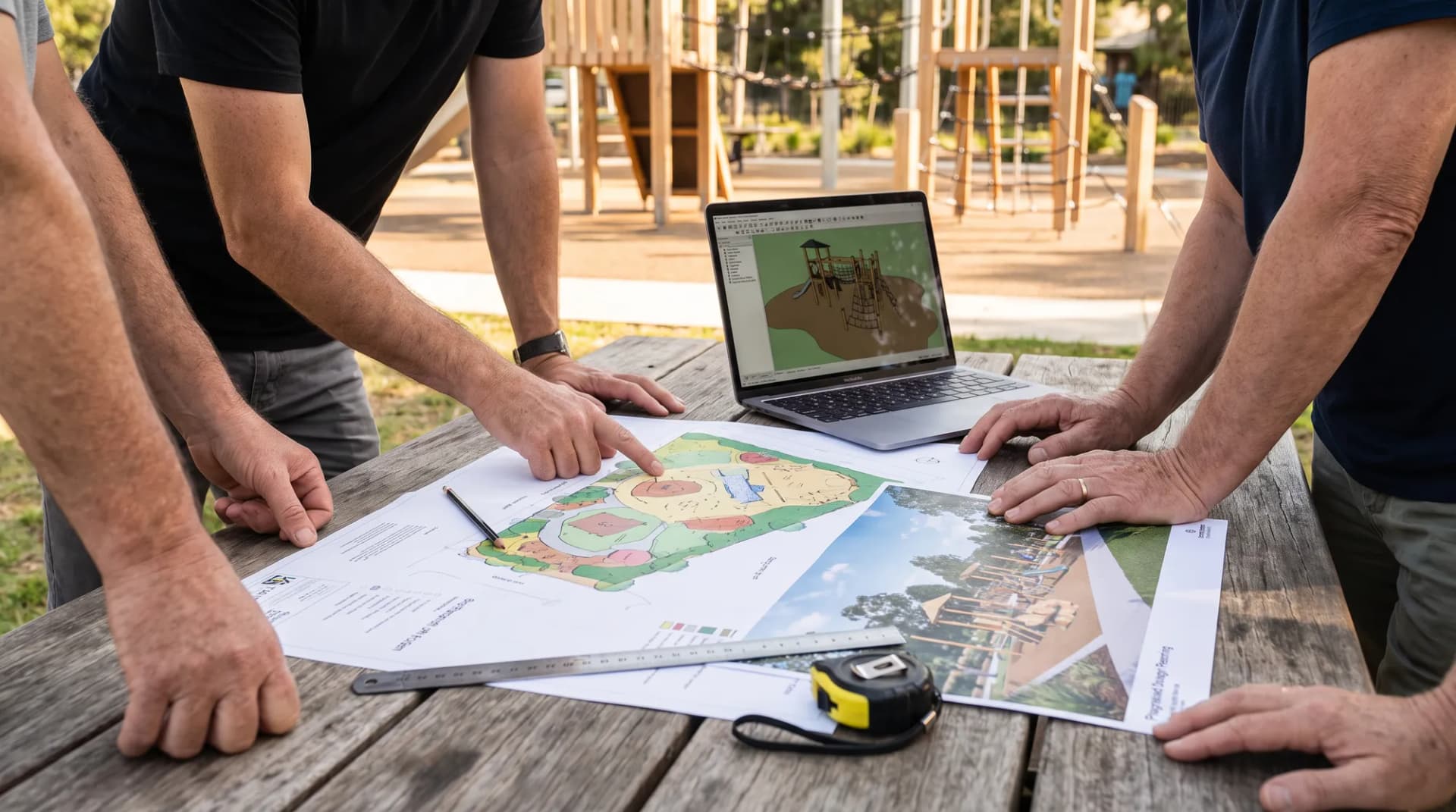
- Scope the project first. Know your full budget (equipment, surfacing, ADA compliance, site prep, and installation) before you start applying. A partial budget is a red flag to a reviewer.
- Match the funder's priorities. A grant focused on early childhood development wants a daycare or elementary application, not a general park request.
- Document the community benefit. Numbers help: how many kids, how many families, what's currently missing.
- Apply early. Most of these programs run on annual fiscal-year cycles with hard deadlines. The biggest reason organizations miss out isn't rejection, it's finding the program after the window closed.
We help with the paperwork
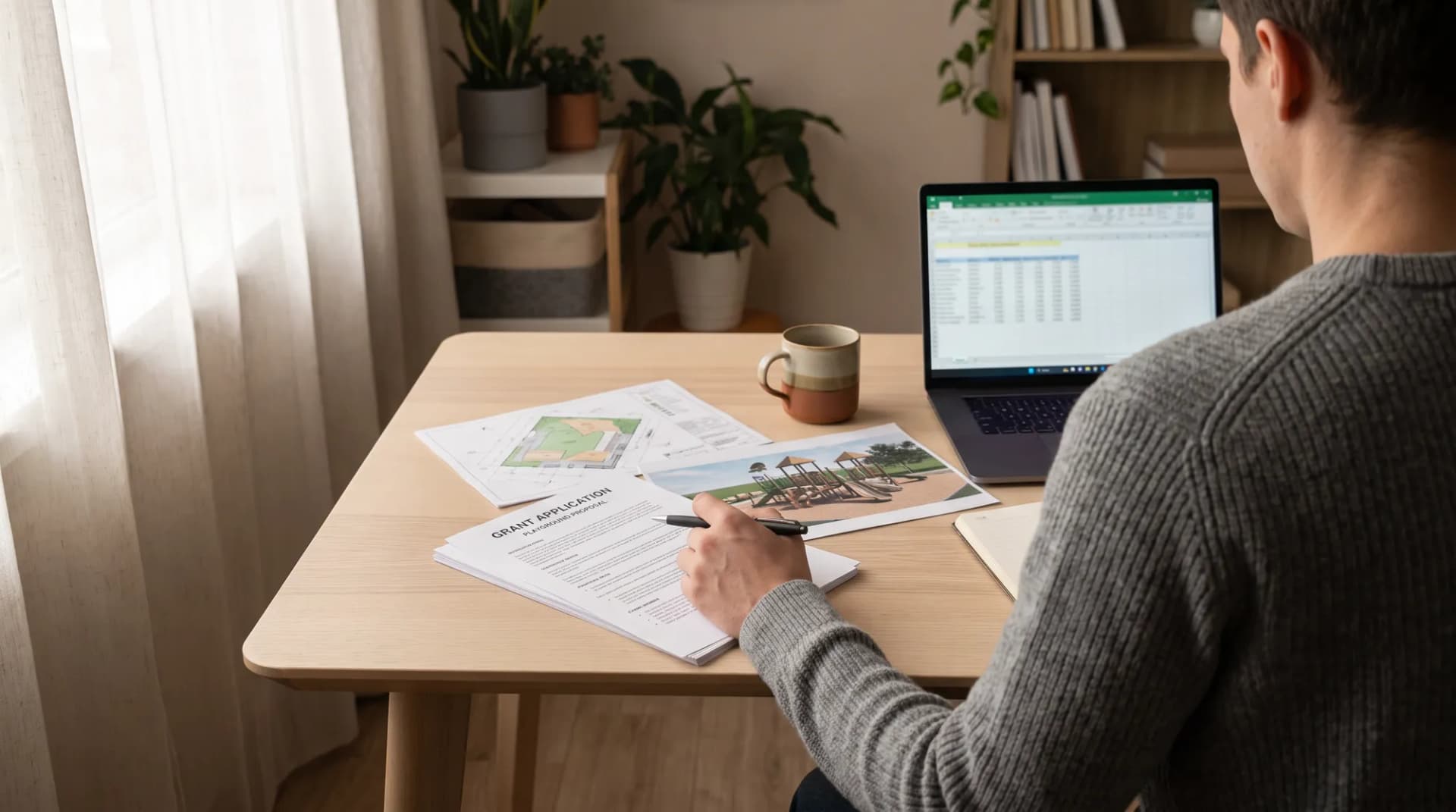
This is the part most playground companies leave you to handle alone. We don't. Our grant funding assistance walks you through the whole process: identifying grants and budget opportunities your project actually qualifies for, helping prepare documentation and cost estimates, and guiding you through timelines and submission.
Don't let funding challenges stall your playground plans.
Ready to build?
Tell us what you're planning and who you're building it for, and we'll help you figure out what you might qualify for, and what it'll take to get there.
Need help faster than a kid down a slide? Call us 954-440-2955 or text us on WhatsApp!
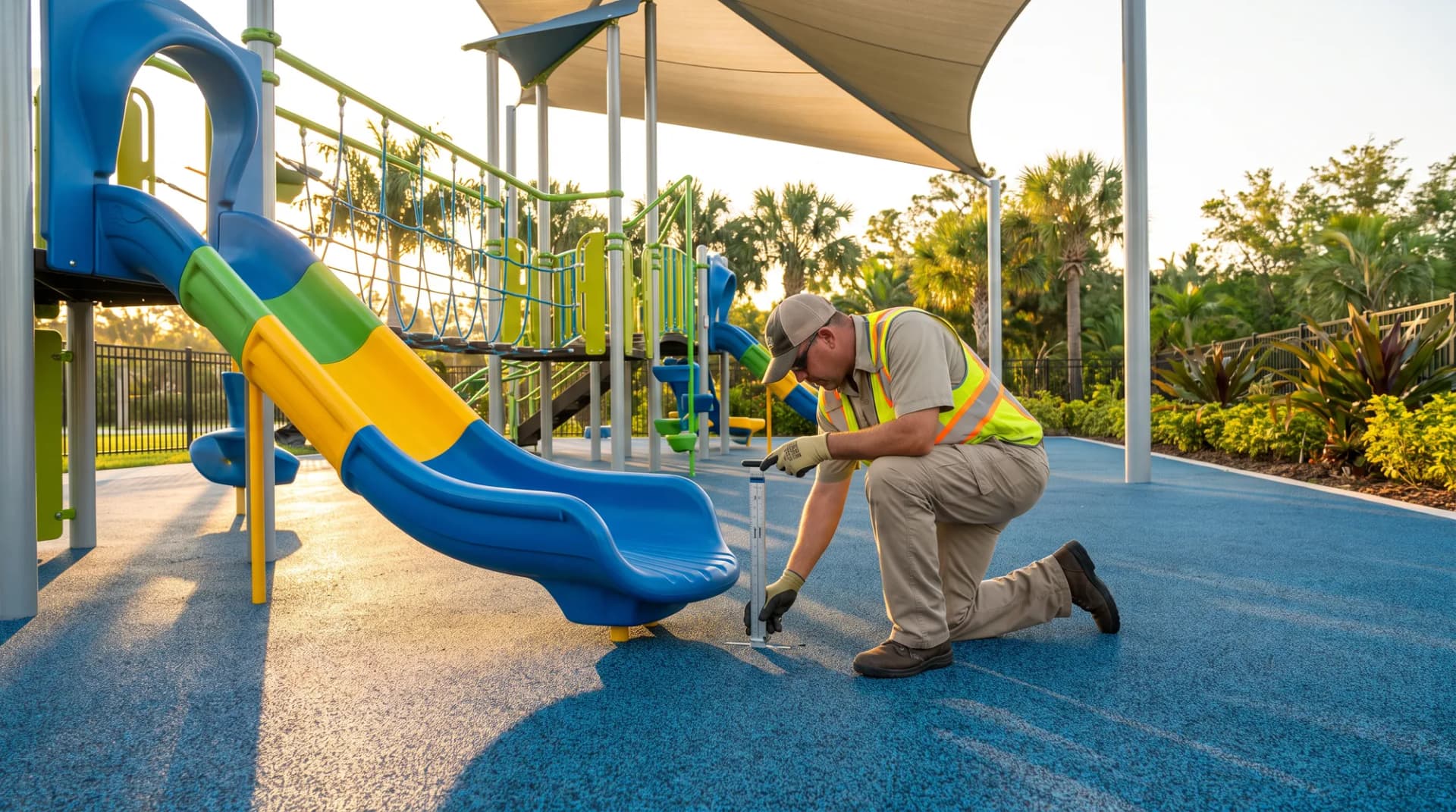
Funding covers the equipment, but it won't catch a rusted bolt or a shade sail that didn't survive the season. Once the budget's in place, run it past our back-to-school playground safety checklist before anything gets installed.
Funding is rarely the reason a playground doesn't get built. Not knowing where to look is. Start with the list above, and if it gets overwhelming, that's what we're here for.