
Most playground budgets go toward the structure: the slides, the towers, the climbers kids actually ask for by name. The surface underneath gets whatever's left over. That ordering has it backwards. A child falls off almost every piece of playground equipment at some point. What they land on is what decides whether that's a scraped knee or a trip to the ER, and it's the single most regulated, most tested part of the entire site.
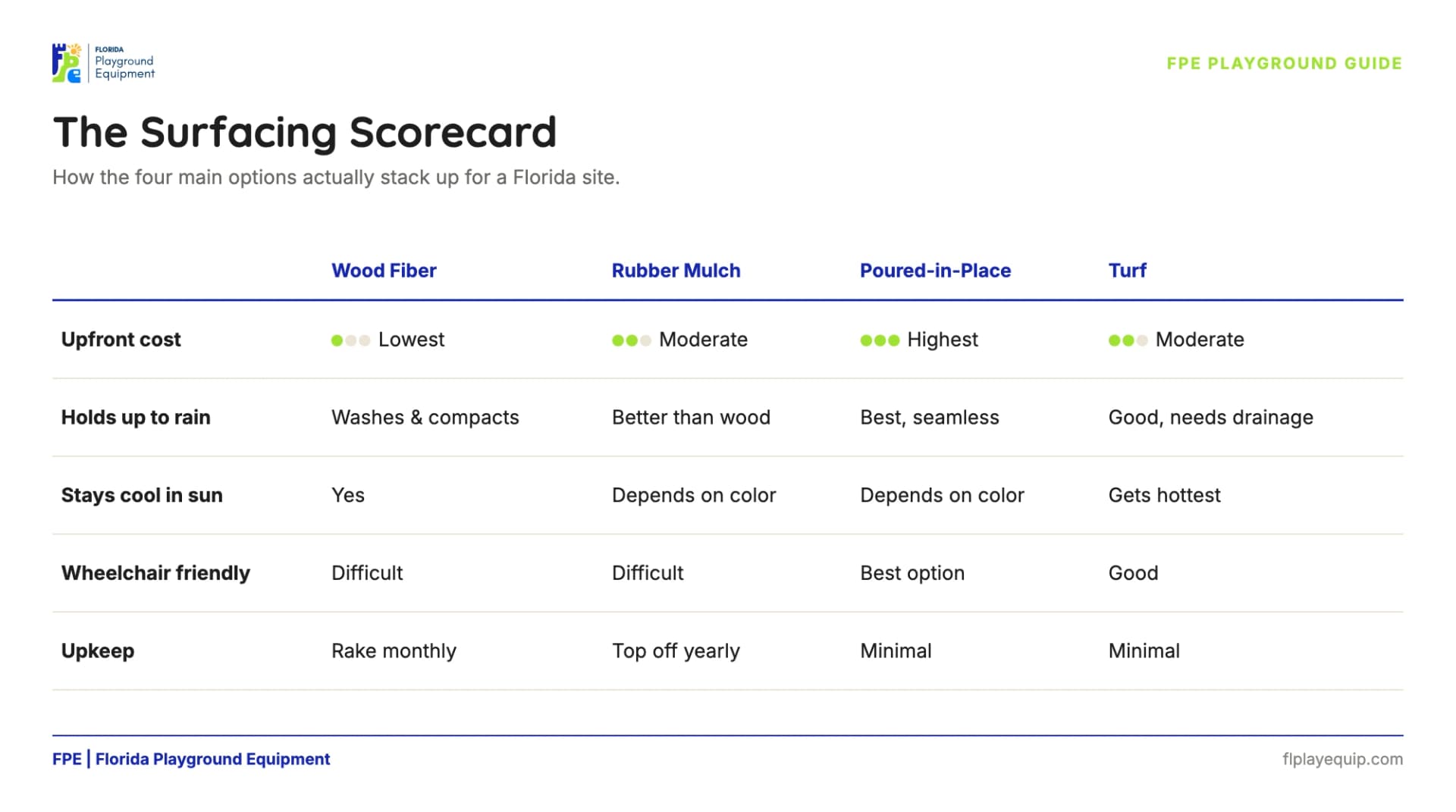
There isn't one right surface. There's a right surface for your traffic, your budget, your maintenance capacity, and, in Florida specifically, your sun and your rain. Here's how the main options actually compare once you get past the brochure.
What the surface is actually rated to do
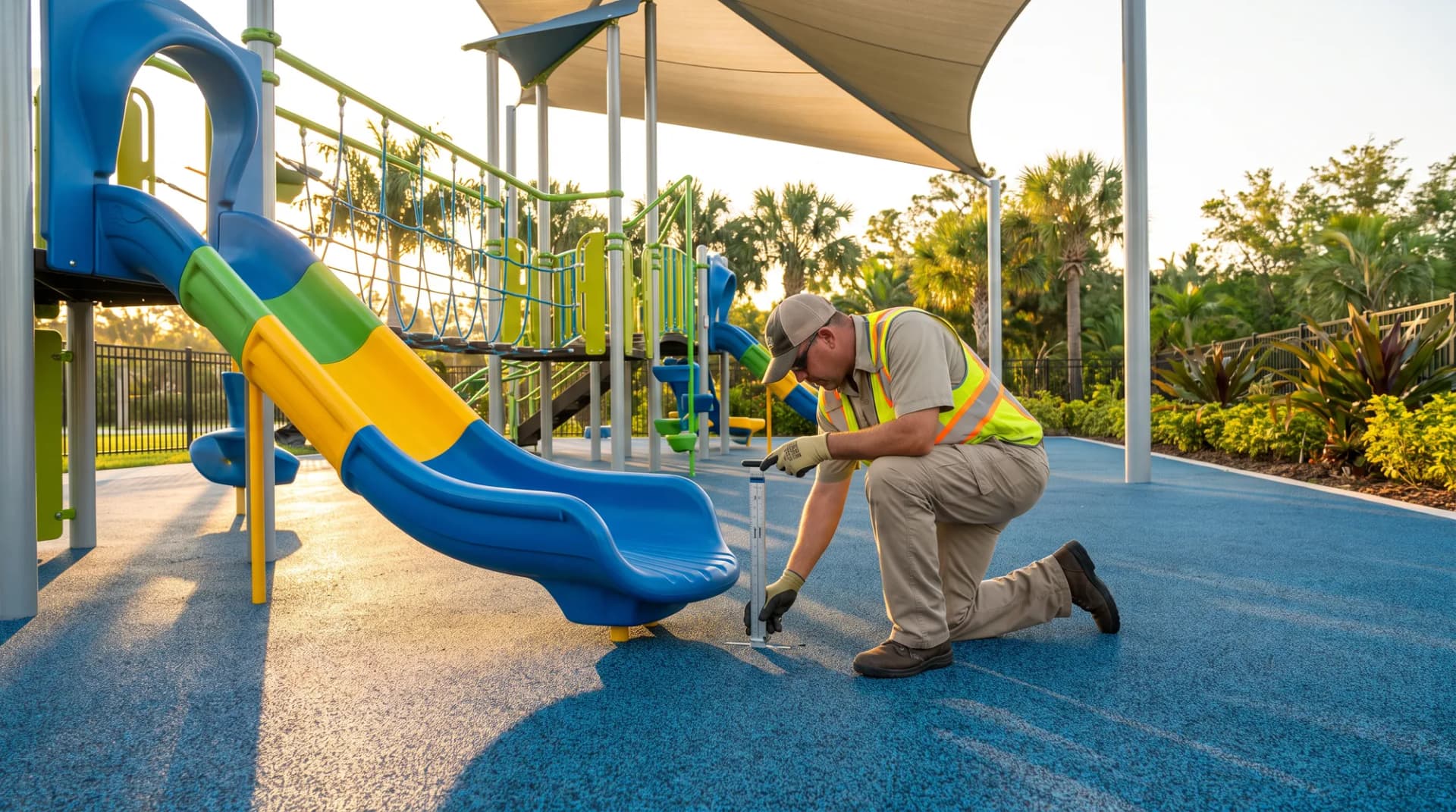
Every compliant playground surface carries a critical fall height rating, tested under ASTM F1292, the number that tells you the tallest piece of equipment that surface can safely sit under. That rating isn't a one-time install spec. Loose-fill materials lose depth over time as they compact, scatter, and wash out, and a surface that was rated for an 8-foot platform in January can be rated for a lot less by August if nobody's topped it off. Whatever you choose, the rating only holds if the surface is maintained to the depth and condition it was installed at. A playground safety inspection is the easiest way to know where yours actually stands.
The Florida number nobody budgets for: heat
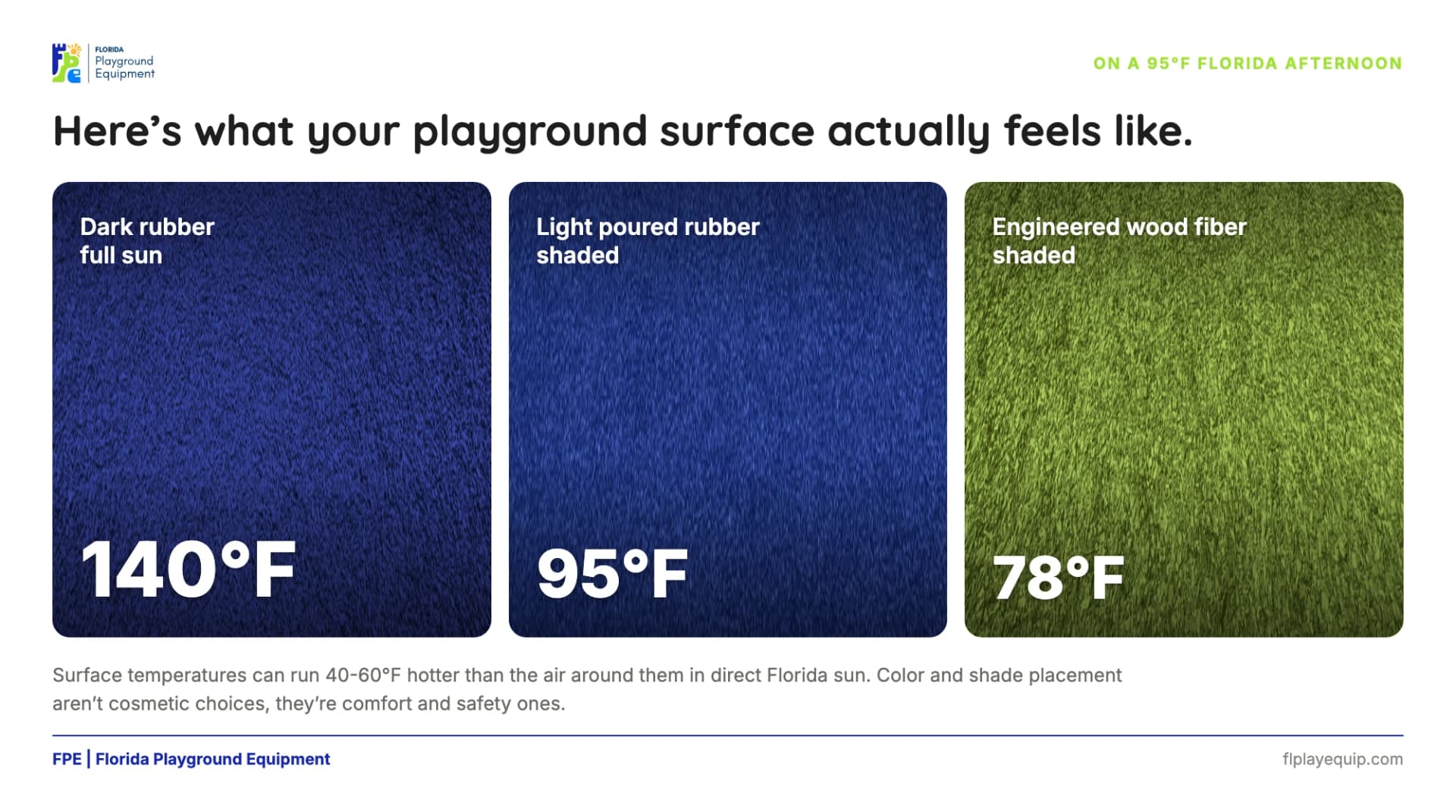
Fall height ratings get all the attention in a surfacing spec. In Florida, the number that ruins more summer afternoons is surface temperature.
A playground surface sitting in direct sun doesn't stay at air temperature, it runs well above it. On a 95-degree afternoon, dark rubber in full sun can reach roughly 140 degrees, which is hot enough to hurt bare feet and bare hands in the few seconds it takes a child to cross it. Put rubber in a lighter color under a shade structure and the same afternoon lands closer to 95. Engineered wood fiber in shade stays cooler still, in the high 70s, because loose organic material doesn't hold heat the way a solid rubber slab does.
That spread is the whole argument for treating color and shade as part of the surfacing decision instead of a styling choice made at the end. A dark poured-rubber surface specified without shade is a surface that sits empty from June through September, no matter how well it performs on fall protection. Light colors, shade structures, and where the trees go aren't extras on a Florida site, they're what keeps the surface usable in the months kids are actually out of school.
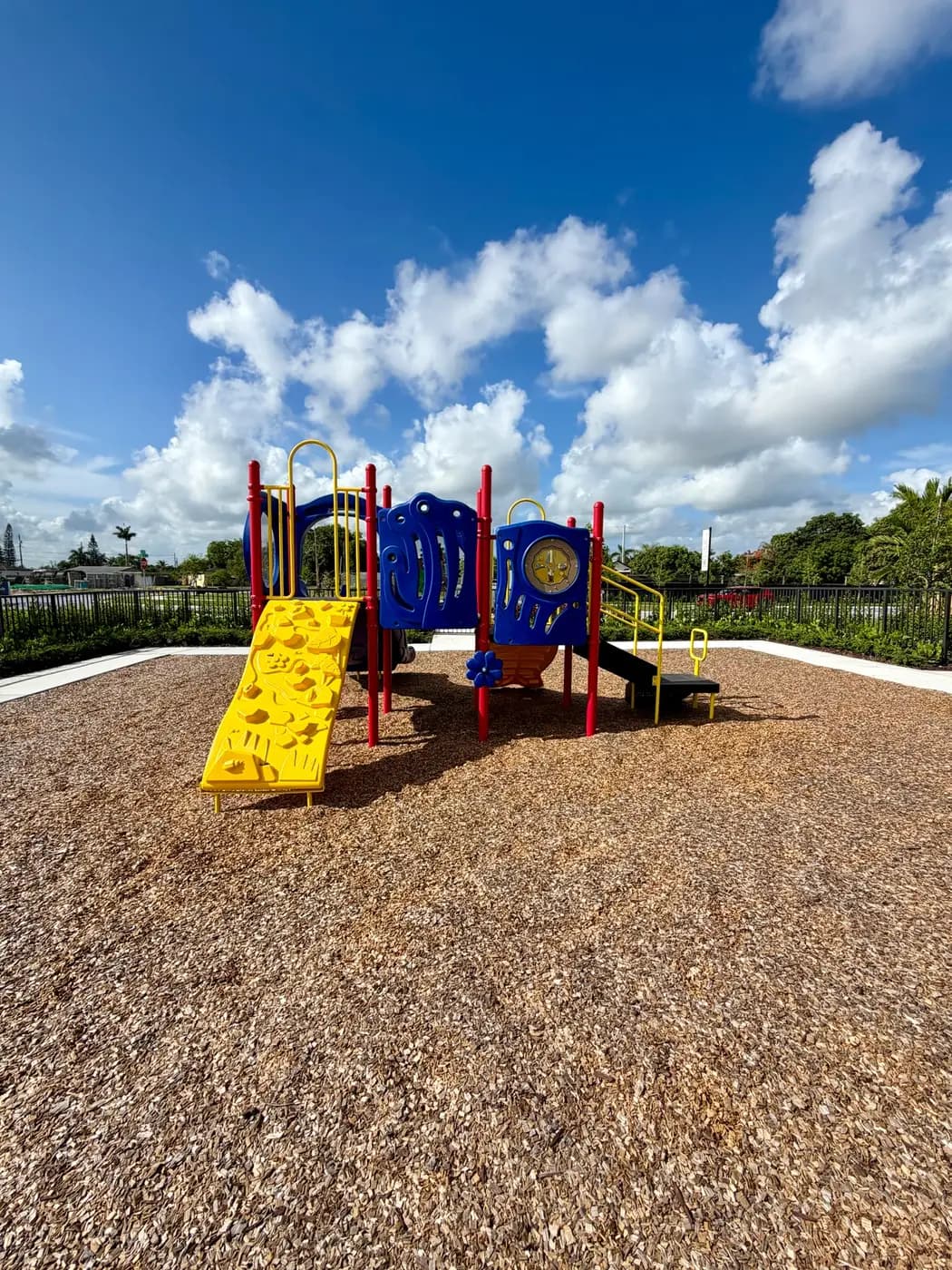
Engineered wood fiber
The lowest cost to install, and the most common surface on older Florida playgrounds for exactly that reason. It's a reasonable choice for tighter budgets, and it performs well when it's properly maintained.
The catch is that "properly maintained" is doing a lot of work in that sentence. Wood fiber compacts under foot traffic, scatters at high-use spots like slide exits, and Florida's afternoon storms wash it downhill and toward drains faster than most sites expect. It needs regular raking and periodic topping off to hold its rated depth, and it's genuinely difficult to keep wheelchair-accessible, since loose material shifts under wheels no matter how well it's installed. If your team has the staff time to check it monthly, it's a solid, affordable option. If it's going to get checked once a year, budget for the gaps it'll develop in between.
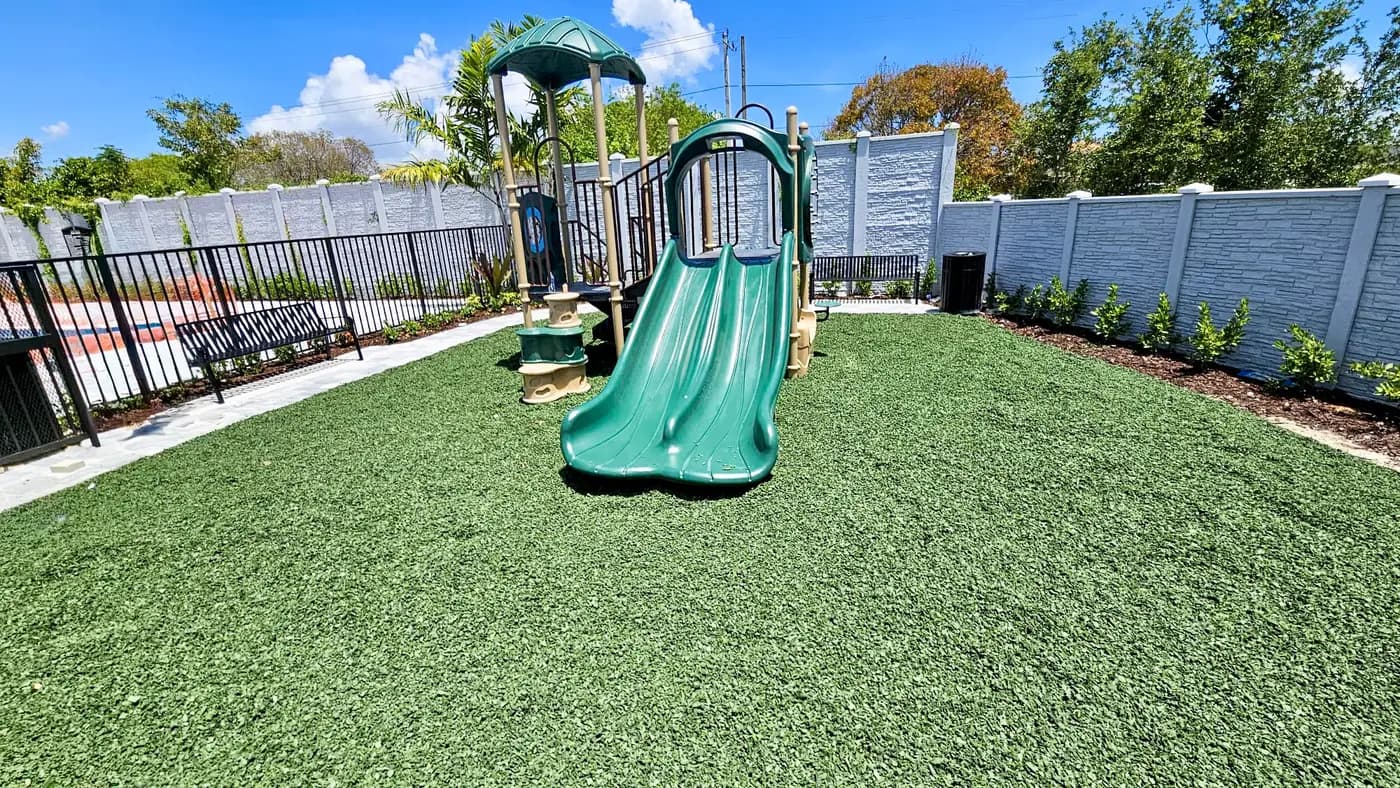
Rubber mulch
Bonded or loose rubber mulch splits the difference between wood fiber and a fully poured surface. It holds up to Florida rain far better than wood fiber, doesn't compact the same way, and typically lasts longer before it needs topping off. It costs more upfront than wood fiber but less than poured rubber, which makes it a common middle choice for sites that want better durability without the full poured-in-place budget.
Color matters more here than people expect. Dark rubber mulch absorbs heat, and on a full-sun Florida afternoon it can get uncomfortably hot to the touch. Lighter colors and shaded placement make a real difference.
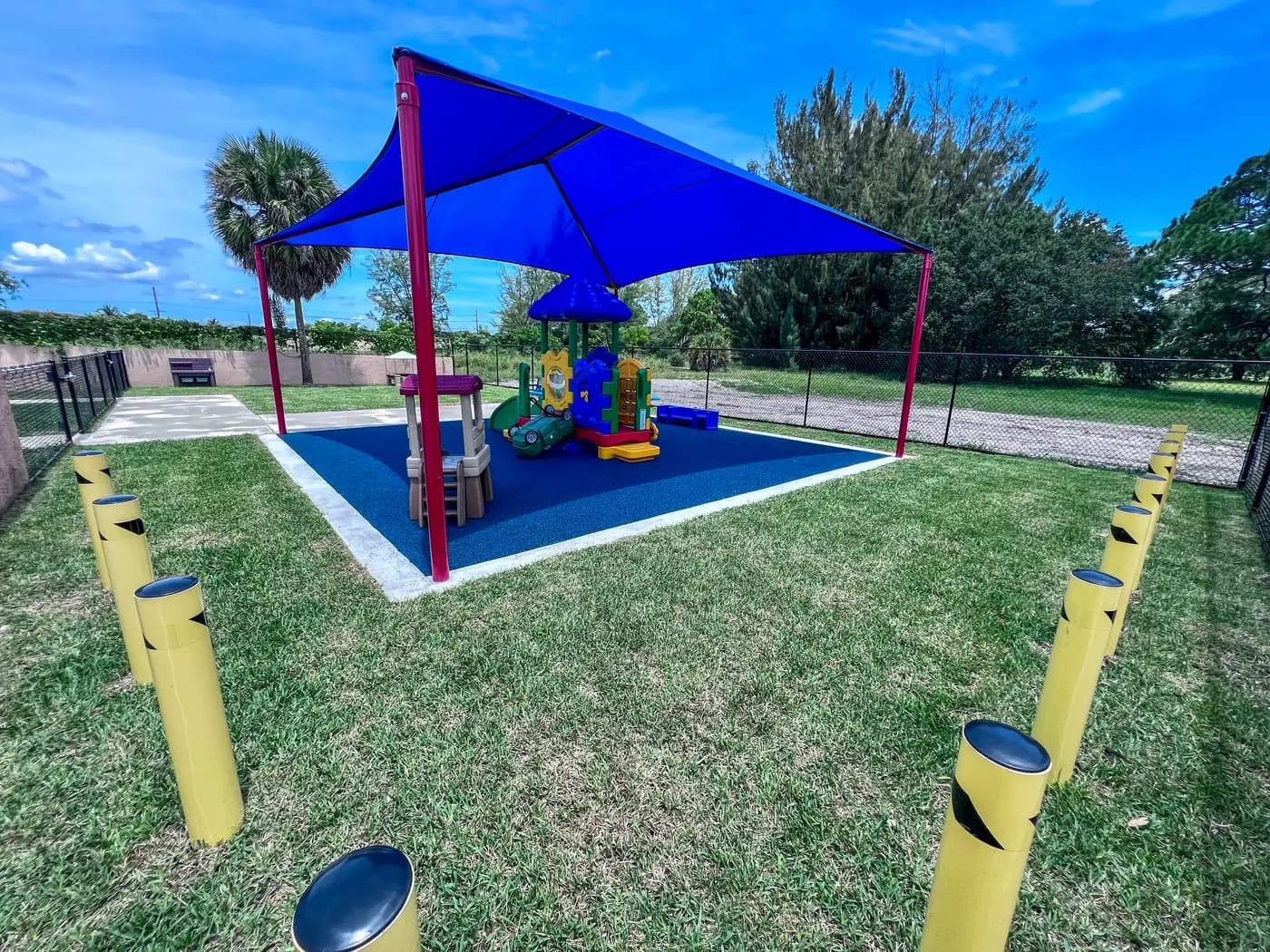
Poured-in-place rubber
The highest upfront cost, and for a lot of schools, municipalities, and HOAs, worth it. Poured-in-place is a seamless rubber surface, which means no raking, no topping off, no loose material to scatter, compact, or wash toward a drain after a storm. It's the most consistently accessible surface for wheelchairs and walkers, since there's nothing loose for a wheel to sink into, which is exactly why it pairs with inclusive play layouts more often than any other option.
The tradeoff is heat and repair. Like rubber mulch, dark poured rubber gets hot in direct sun, so color choice and shade placement aren't cosmetic decisions, they're comfort and safety ones. And while the surface itself is low-maintenance, a tear or a bubble in poured rubber needs a specialist to patch it correctly. It's not a weekend fix for a facilities crew the way raking wood fiber is.
Synthetic turf
Turf shows up on a lot of wish lists because it looks finished and clean. For playground fall protection specifically, it has to be installed over a shock-absorbing pad rated to the same ASTM F1292 standard as everything else, the turf itself isn't what's protecting a fall. And turf is the surface most affected by Florida sun: synthetic fibers get hot fast, often hotter than rubber, which makes shade placement non-negotiable if turf is part of the plan. It reads best for low-fall-height areas and walkways rather than the zone directly under tall equipment.
So which one, for a Florida site
If budget is the main constraint and you have staff who'll actually walk the site monthly, engineered wood fiber still works, our own back-to-school safety checklist exists largely because so many sites run on it. If you want better storm resilience without the full poured-rubber cost, rubber mulch is the honest middle ground. If the site needs to be genuinely accessible, gets heavy daily traffic, or you're planning for the next decade rather than the next budget cycle, poured-in-place earns its price. And wherever turf shows up, plan shade around it from day one, not after the first complaint about hot feet.
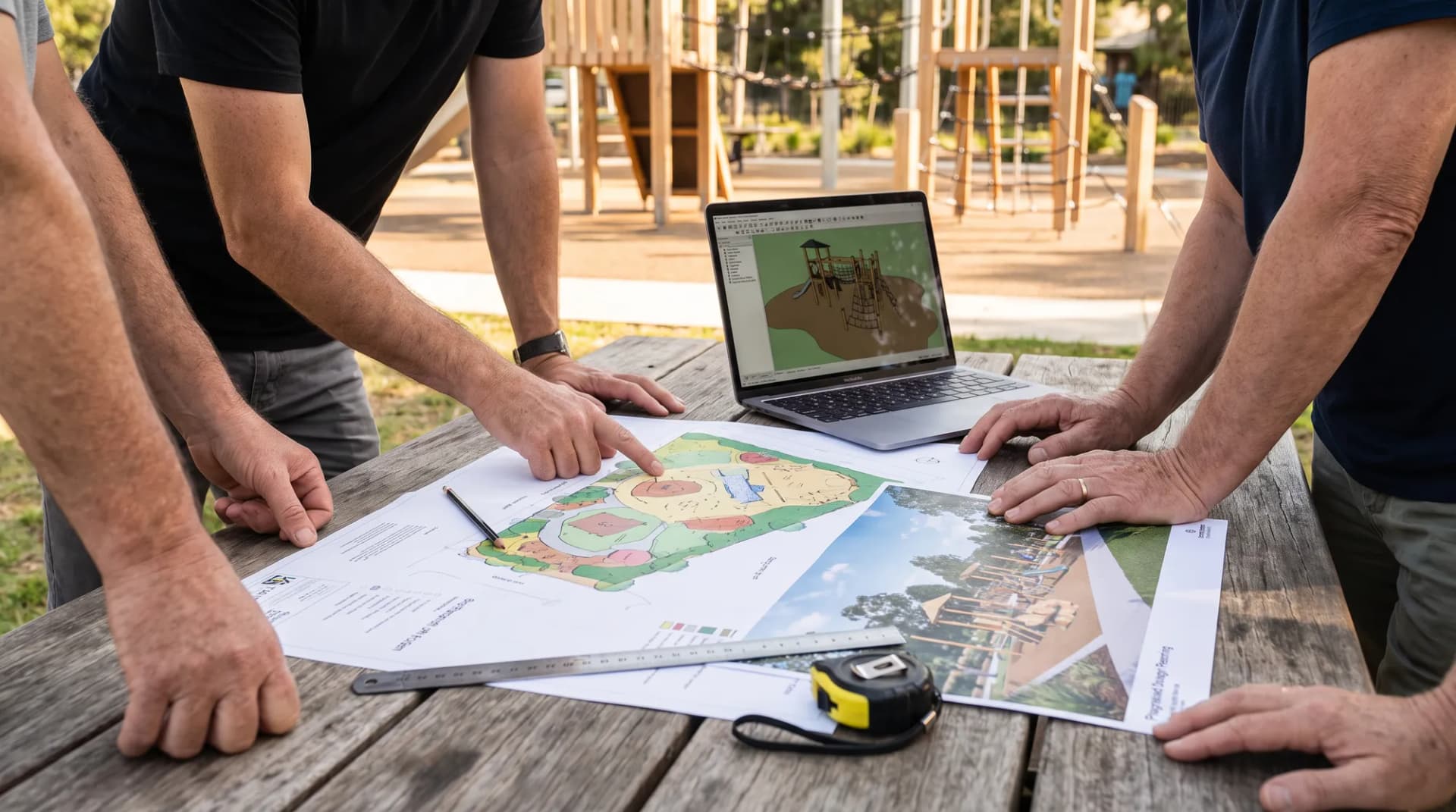
The right answer depends on who's using the site and how often, which is exactly what a surfacing evaluation is for.
Which surface fits your site?
Answer a few quick questions about your budget, upkeep and traffic, and we'll tell you which surface actually makes sense for it.
Question 1 of 5
What's driving the budget?
Or skip the quiz and talk to someone directly
Our surfacing evaluation looks at your traffic, budget, climate exposure, and accessibility needs on site, and tells you which option actually makes sense, not just which one costs least today.
Planning new surfacing or a resurface?
Tell us what's there now and what you're hoping to fix, and we'll help you scope the right surface and get a quote together.
Need help faster than a kid down a slide? Call us 954-440-2955 or text us on WhatsApp!
Surfacing is also what makes or breaks an inclusive layout: no surface, no matter how good the equipment is, is inclusive if a wheelchair can't actually roll across it. We go deeper on that in what inclusive playground design actually means.
The equipment is what sells a playground. The surface underneath is what keeps it safe long after the ribbon-cutting photos are taken.