
Walk onto most playgrounds built in the last decade and you'll find the same thing: a ramp leading up to the play structure. Technically, that's compliant. A wheelchair can get up there.
What happens next is the part nobody checks. Once a child reaches the top of that ramp, is there anything up there they can actually do? Or is it a transfer platform, a deck, and then equipment built for kids who can stand, grip, and climb? That gap between "a wheelchair can reach this" and "a child in a wheelchair can play here" is the whole difference between compliant and inclusive, and most playgrounds only ever solve the first one.
The compliance trap
The ADA Standards for Accessible Design cover play areas in real detail: how many ground-level and elevated play components a site needs, how many of those have to sit on an accessible route, how wide that route has to be. It's a genuinely useful framework. The problem is what it doesn't cover.
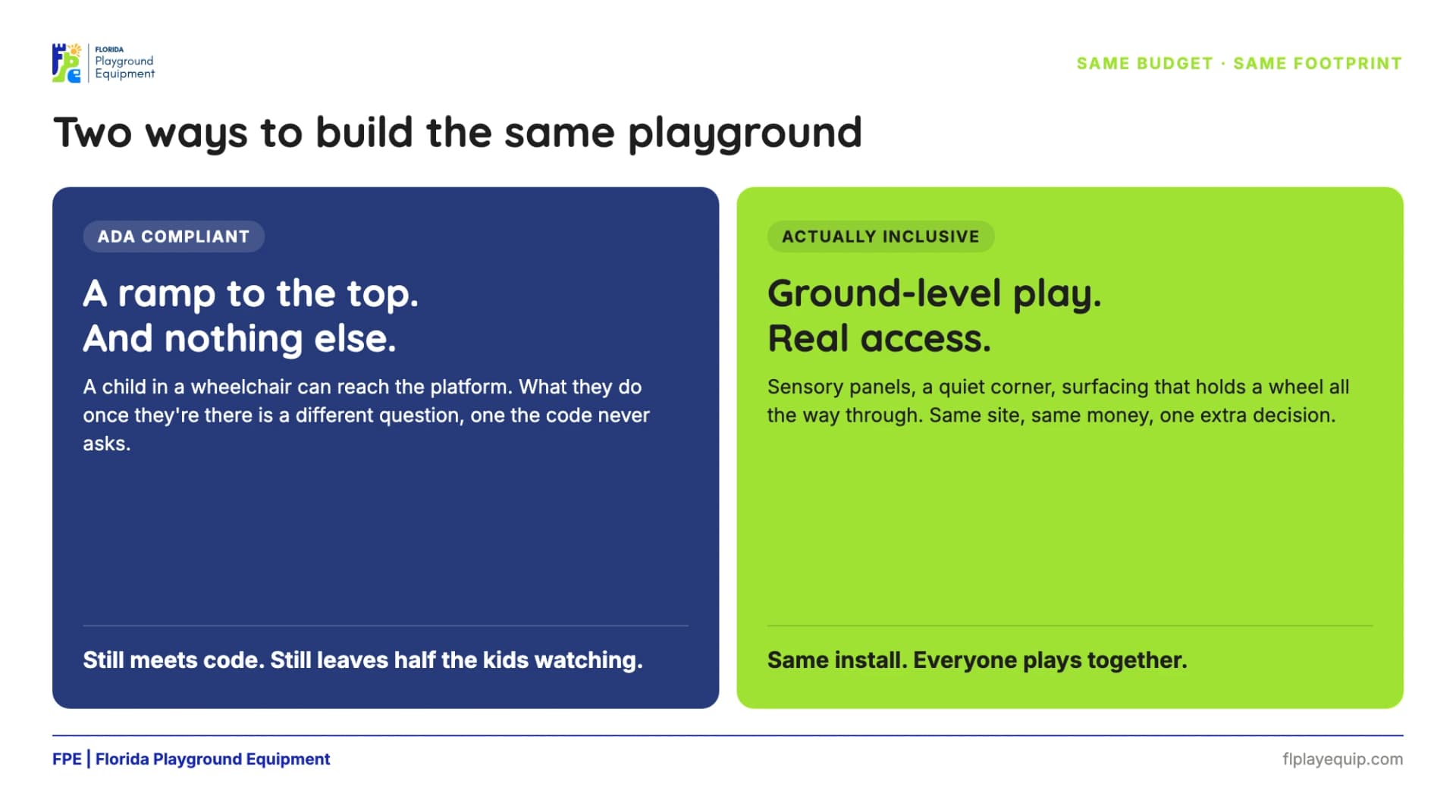
The standard asks whether a child can reach a component. It doesn't ask whether, once there, a child who can't grip a climbing hold or can't sit unsupported actually has something to do. A site can hit every number in the code and still leave a wheelchair user staring at a rock wall from a platform built for someone else. We call that an accessible path to nowhere, and it's the most common way inclusive playgrounds fail without technically failing at all.
The gap is easiest to see with both versions side by side. Same site, same footprint, same budget:
Beyond the ramp: six things that actually make a playground inclusive
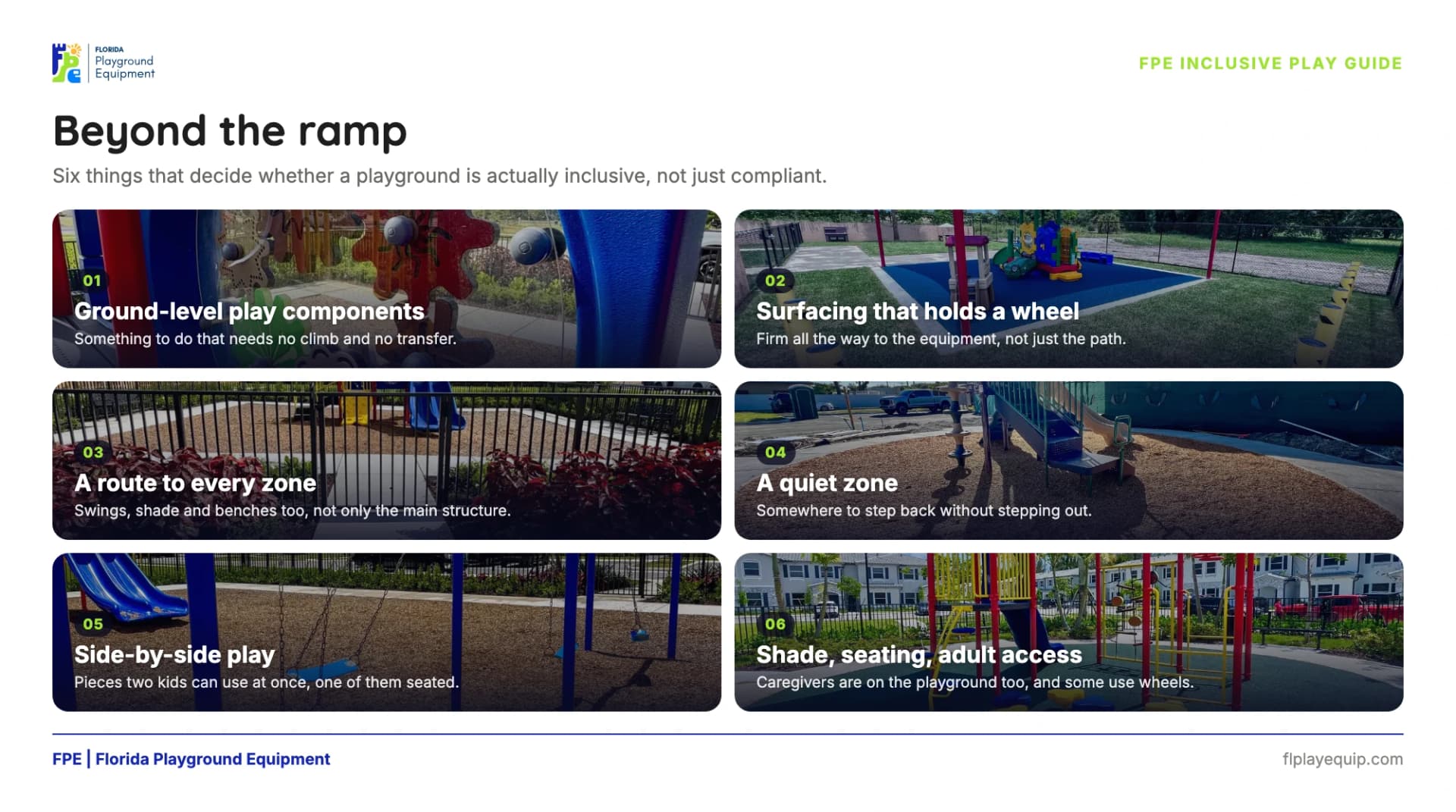
If the ramp is the only thing sitting on the inclusion line of your spec, the site will pass inspection and still leave kids out. These are the six things we look for when someone asks us whether a playground is genuinely inclusive, and most of them cost less than people expect.
- Ground-level play components. Sensory panels, gear boards, music, spinners, mounted at reach height for a seated child. The test is simple: if a child never leaves their wheelchair, is there anything here for them to do?
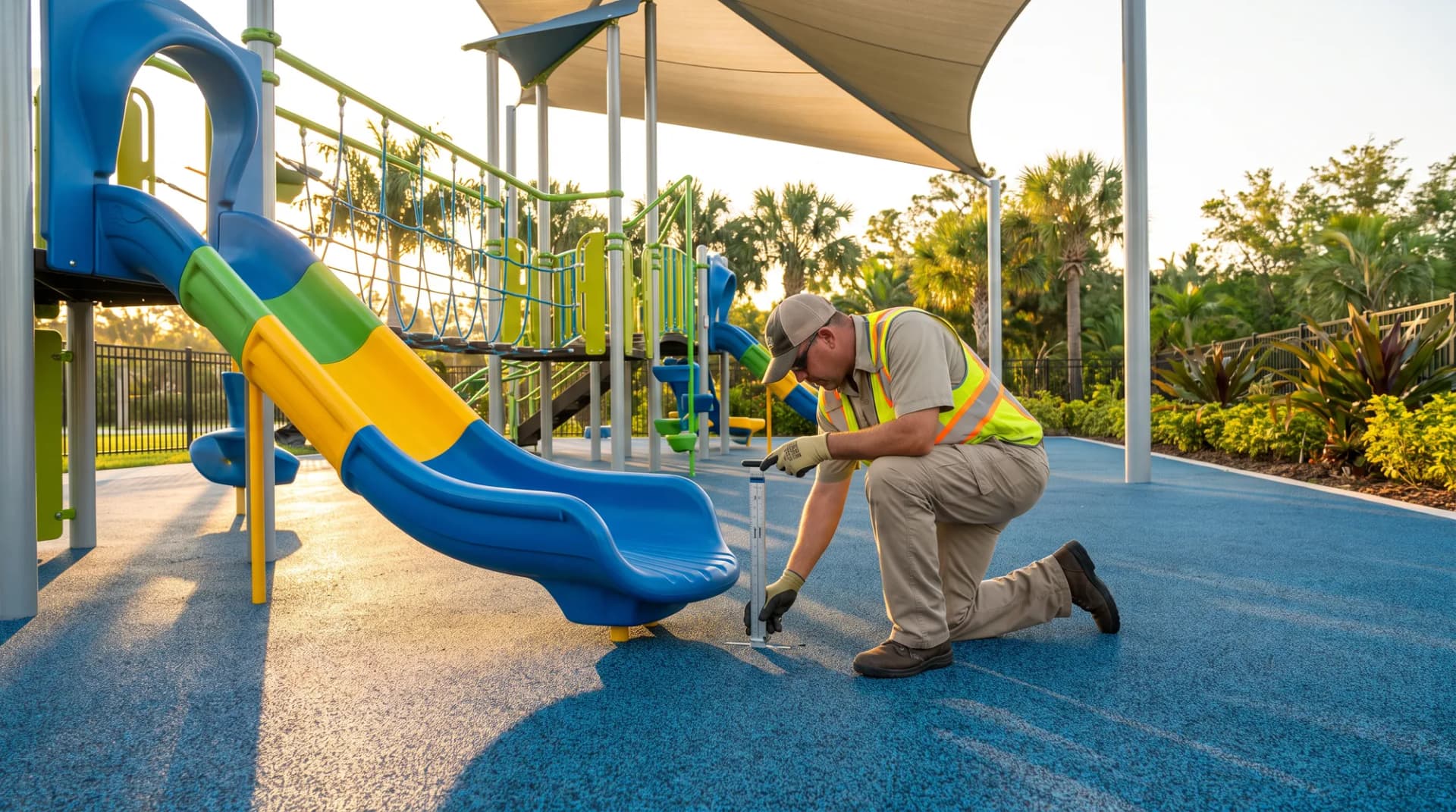
- Surfacing that holds a wheel. Firm and stable all the way to the equipment, not just along the main path. Loose fill that stops six feet short of the play structure is the most common way an otherwise good design falls apart.
- A route that reaches every zone. Not just the main structure. The swings, the shade, the bench a parent sits on, the accessible parking stall at the far end of the lot, all of it connected on one surface you can actually roll across.
- A quiet zone. Somewhere a child can step back without stepping out. A panel or a cozy spot slightly off the busiest path does more for a sensory-sensitive kid than another piece of equipment ever will.
- Equipment built for side-by-side play. Wide slides, roller tables, group spinners, cozy domes: pieces two kids can use at the same time, one of them seated. This is what turns access into playing together.
- Shade, seating and adult access. Caregivers are on the playground too, and sometimes they're the ones using the wheels. A site a grandparent in a wheelchair can't cross isn't an inclusive site, however good the equipment is.
Start at ground level, not at the top of a ramp
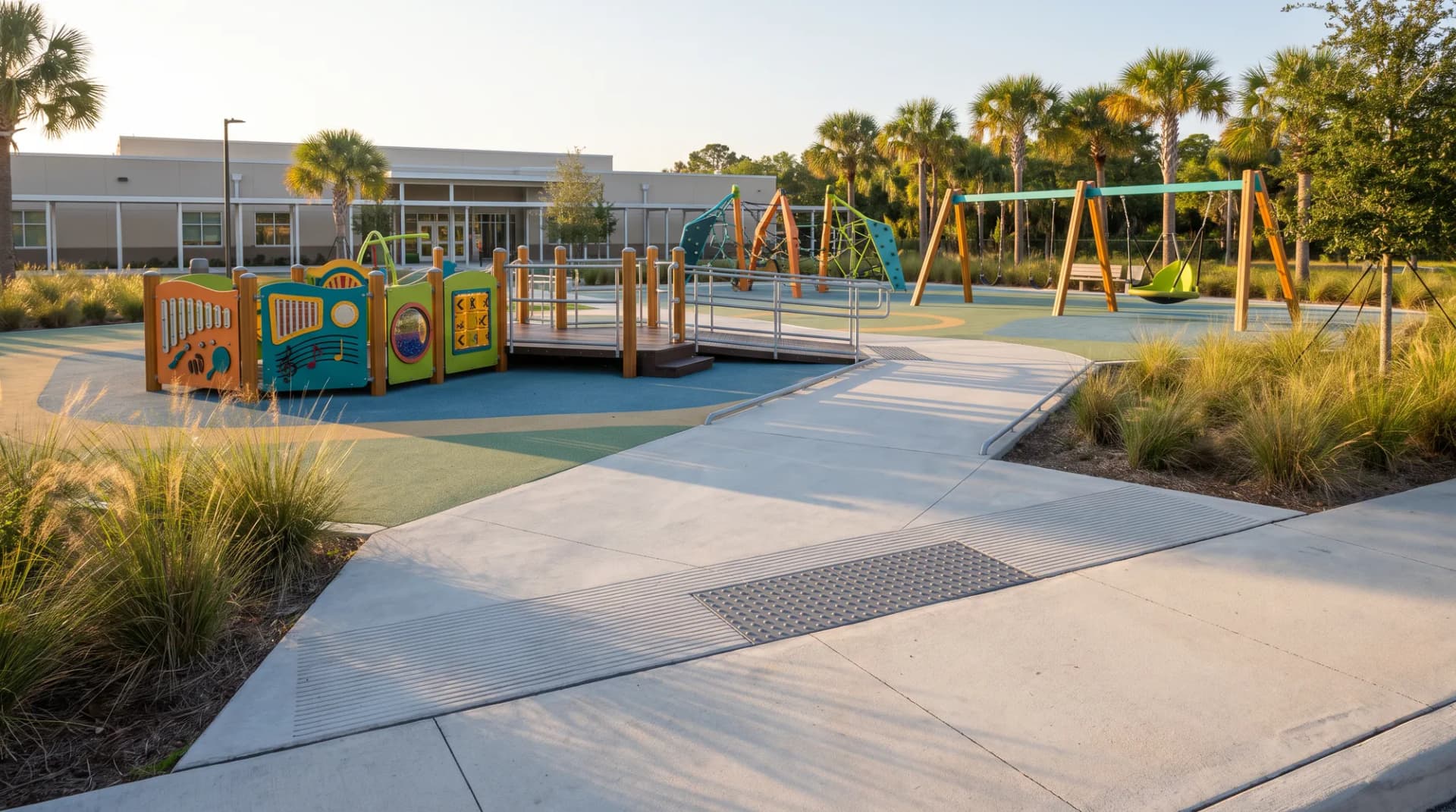
The fix isn't a bigger ramp. It's rethinking where the actual play happens. Ground-level components don't need a transfer or a climb to use. A child in a wheelchair, a child using a walker, and a child who just wants to sit down and spin a gear for a while all get to the same spot the same way everyone else does: by rolling or walking straight up to it.
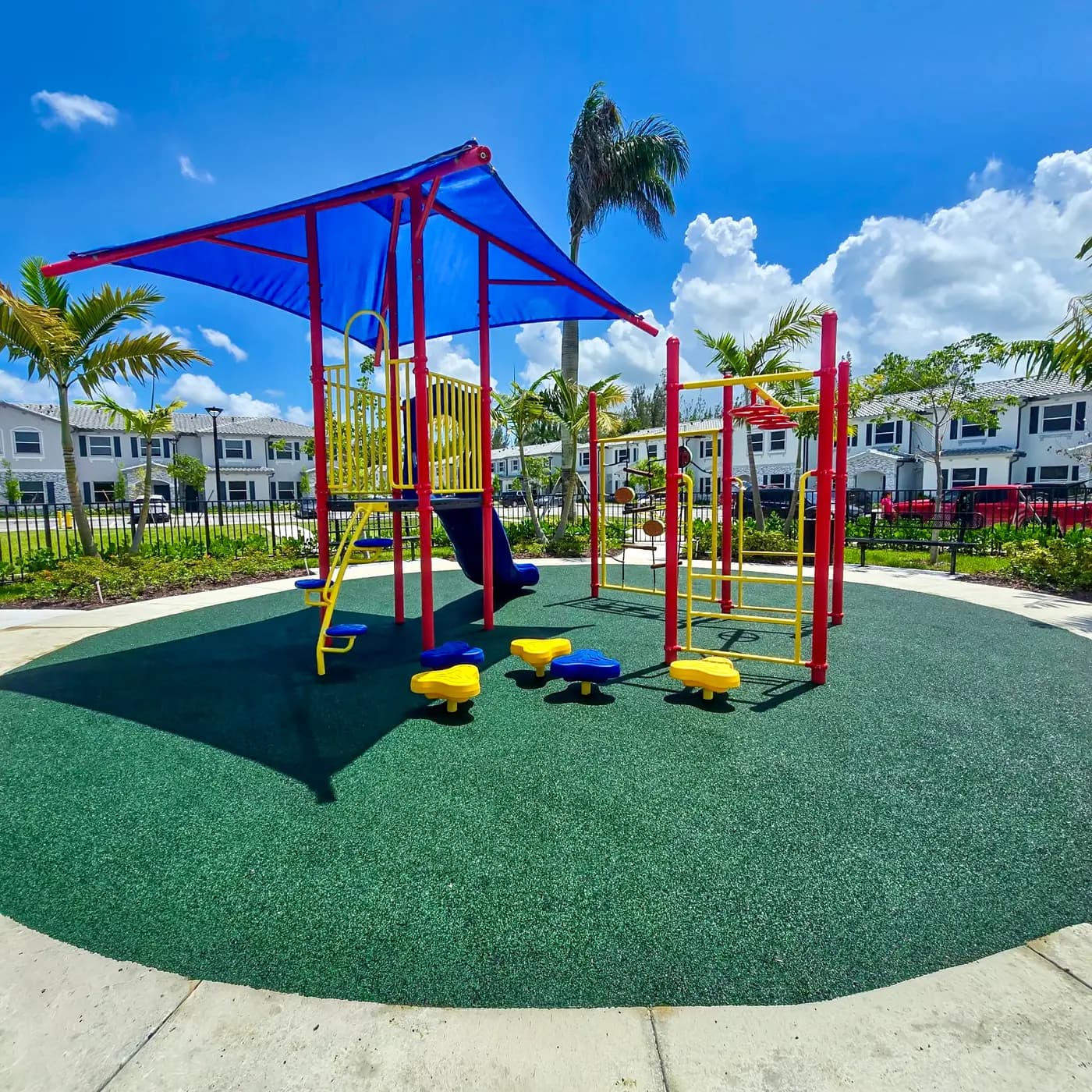
That's the thinking behind the freestanding sensory spinner and gear panels we installed at Vivant Community Amenity Park in Homestead. They sit beside the main play structure rather than tucked off to one side, so the kids using them are in the middle of everything instead of parked at the edge of it. Placement is half the work here. A sensory panel in the far corner of the site is technically a ground-level component and practically a consolation prize.
Not every barrier is a step
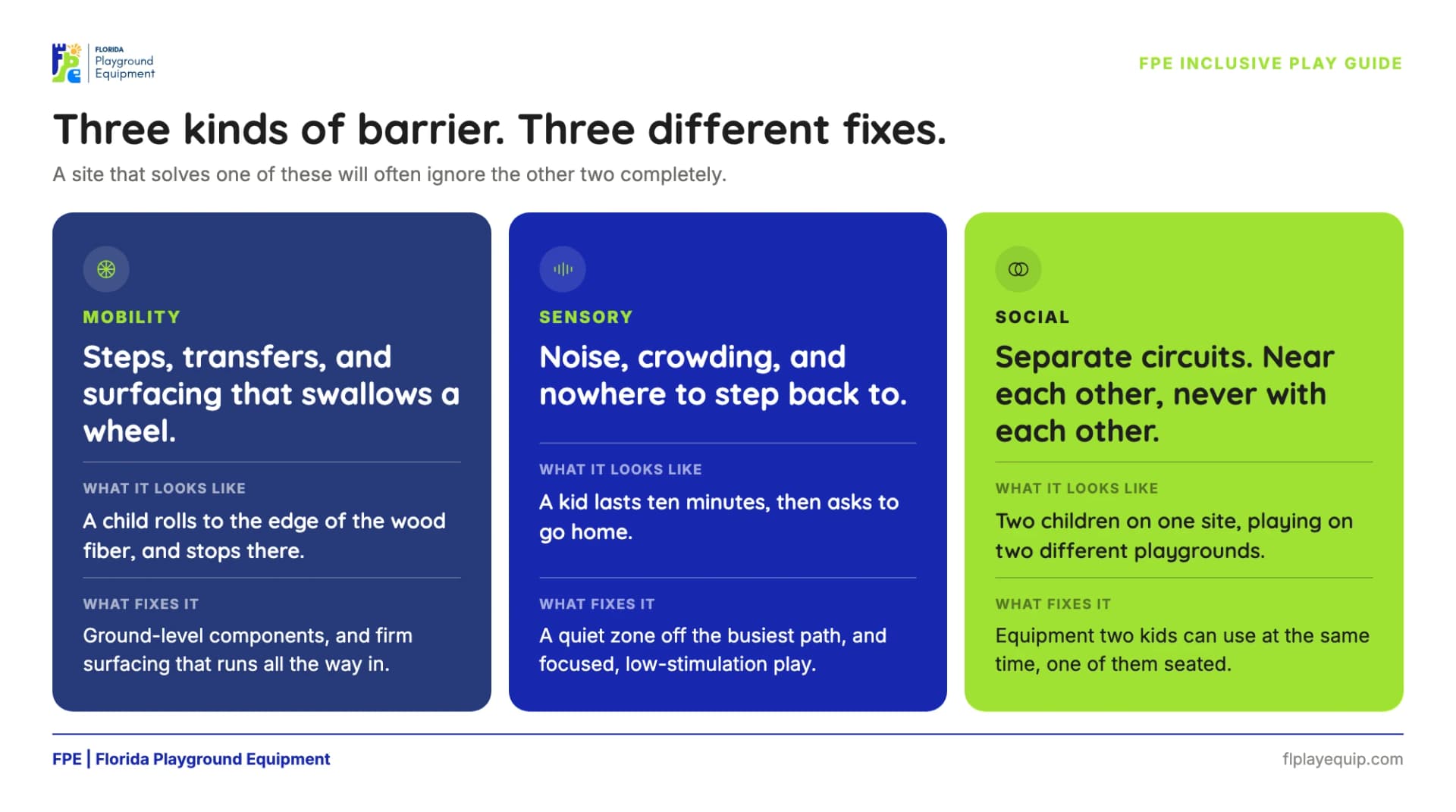
Inclusive design gets talked about as a wheelchair question, but a meaningful share of the kids who need it have sensory or processing needs instead: autism, ADHD, sensory processing differences. For them, the barrier usually isn't a ramp, it's noise, crowding, and a play structure that offers no way to step back without stepping out entirely.
That means building in options, not just access. A quieter component away from the busiest path. Panels that give a child something to focus on without a wall of competing sound and motion. A spot where a kid can watch for a minute before joining in, without it reading as "not participating." None of that shows up on an ADA checklist, and all of it is the difference between a playground a sensory-sensitive kid tolerates and one they actually want to be at.
It's worth being precise about this, because the three kinds of barrier need three different answers, and a site that solves one of them will often ignore the other two completely.
The grown-ups are part of the picture too
Here's a question that almost never comes up in a playground meeting: can the adults get in?
Playground design treats grown-ups as spectators, so the accessible route tends to stop at the edge of the equipment and the seating goes wherever there's room left over. That works right up until the person bringing a child to the playground is the one using a wheelchair, a walker or a cane, which happens often enough that it belongs in the brief. A parent who can't get close enough to spot their toddler ends up supervising from thirty feet back, or not coming at all.
It isn't a difficult fix. Firm surfacing that continues past the equipment rather than stopping at it, a bench with clear space beside it instead of a bolted-down row, and shade over the spot where adults actually stand. None of it shows up in a play value calculation, and all of it decides whether a family comes back next weekend.
The surfacing nobody thinks about
Here's the detail that sinks more "inclusive" playgrounds than any piece of equipment: the ground under it. Loose-fill surfacing, wood fiber, mulch, pea gravel, shifts and compacts the moment a wheelchair rolls across it. A child can have every ramp and every ground-level component in the world and still get stuck ten feet from the equipment because the surface underneath them won't hold a wheel.
Poured-in-place rubber and rubber tile are the surfaces that actually deliver what the equipment promises: firm, stable, and consistent all the way to the components, not just up the ramp. If you're planning an inclusive site and the surfacing conversation happens after the equipment is already chosen, it's happening too late.
What it actually costs
The assumption we hear most is that inclusive automatically means a much bigger budget. It doesn't have to. Ground-level sensory and gear components are often less expensive than elevated play systems, not more, and a well-planned site layers them into the budget you already have rather than bolting them on as an extra.
The expensive version of inclusion is the retrofit: the ramp added after the structure is already placed, the poured rubber cut in around equipment that's bolted down, the second accessible route built because the first one stopped short of the swings. Decided at the sketch stage, most of this is a layout choice. Decided after the install, it's a change order.
Plan it as inclusive from the first sketch
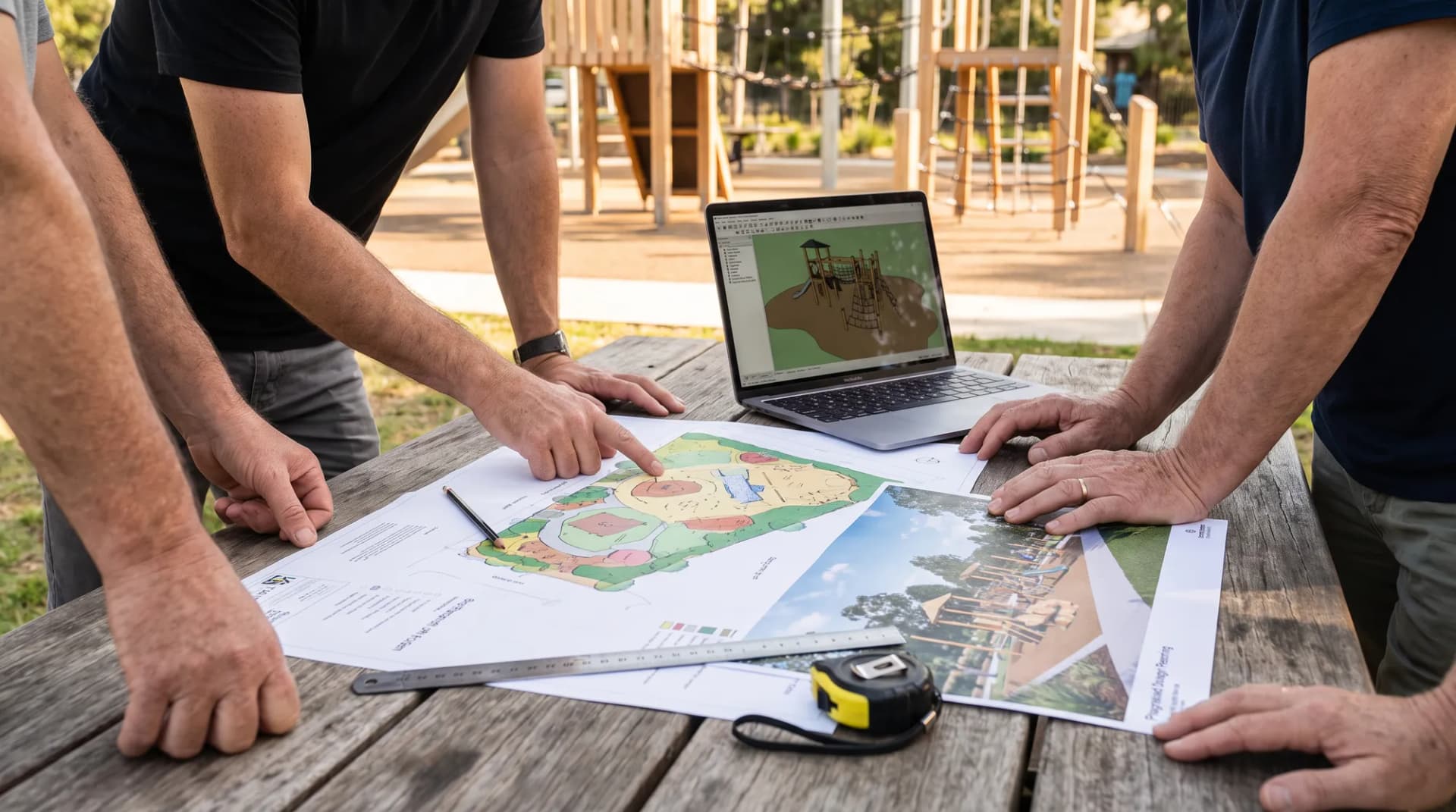
Our playground and park design consulting starts with who's actually going to use the site, not just the code minimums, so ground-level play, surfacing, and accessible routes work together instead of getting bolted on later.
Planning an inclusive site?
Tell us about the space and who it's for, and we'll help you figure out what a genuinely inclusive layout looks like for your budget.
Need help faster than a kid down a slide? Call us 954-440-2955 or text us on WhatsApp!
The surfacing question deserves its own deep dive, since it decides whether any of this actually works once it's installed. We cover the tradeoffs between rubber, wood fiber, and poured-in-place in our Florida surfacing guide.
A ramp gets a child to the playground. Good design is what happens after that.